
Jeep Grand Cherokee Ignition Coil Housings and Molding Quality
A molding workstation prompts a focused review of connector geometry, flash and consistency in ignition coil housings.
Start with the housing interfaces
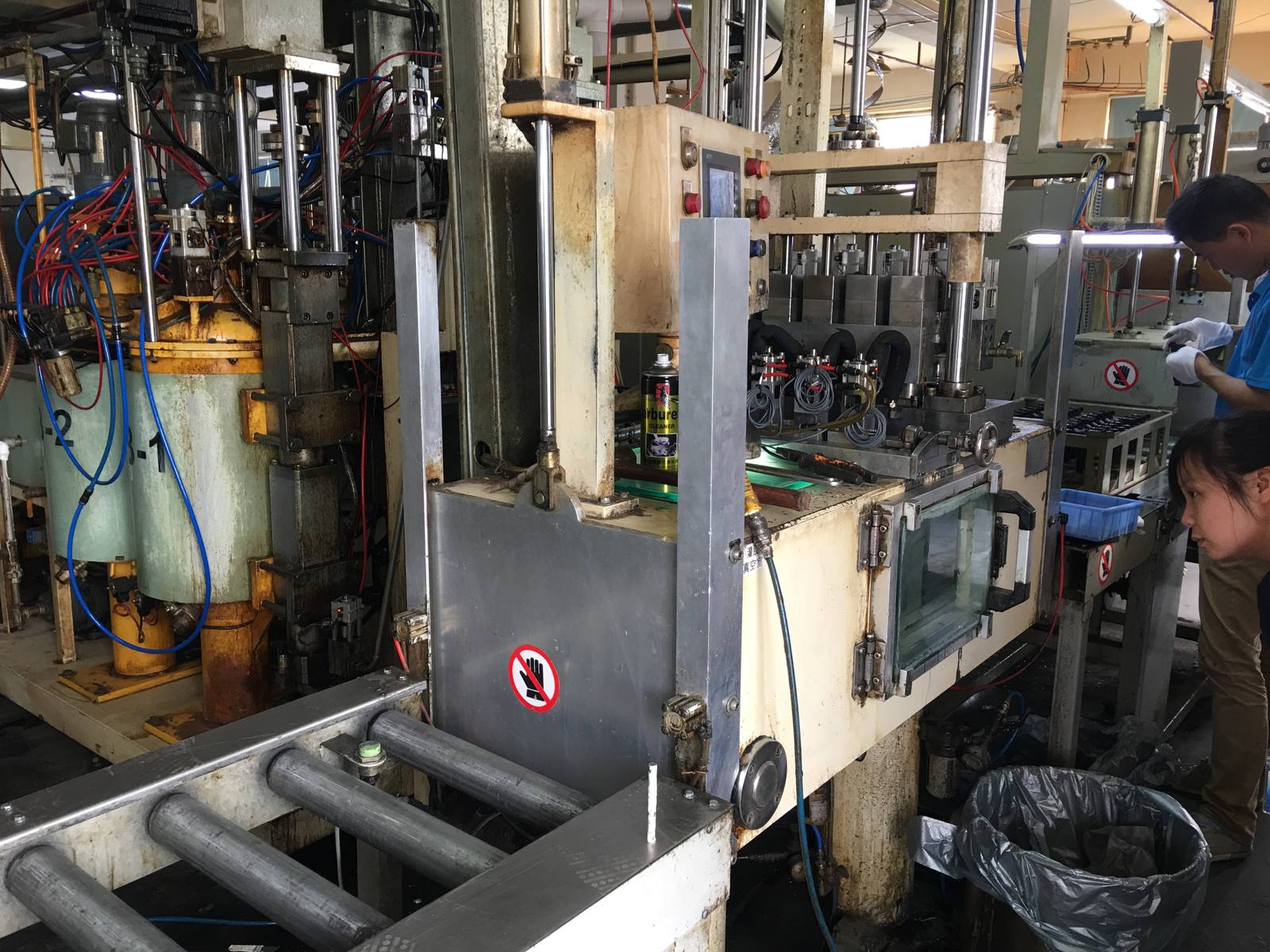
The tooling, guide columns and material handling in this photograph suggest a molding production stage. For Jeep Grand Cherokee ignition coil housings, the important quality questions concern the interfaces that locate and connect the finished component. Connector cavities, retaining features and mounting areas must match the approved geometry. Their condition can affect assembly long before an electrical test is performed.
Recognize flash and incomplete features
Flash is excess material extending beyond the intended molded shape. At a connector or mounting face, it can interfere with seating or retention. Inspect thin features for incomplete filling and examine important surfaces for distortion. Record the location and size of a defect against the drawing requirement. Trimming should follow an approved process that preserves the part geometry and prevents loose fragments from remaining inside the housing.
Compare cavities and insert positions
A mold can produce several components in one cycle. Identify individual cavities where possible so recurring dimensional differences can be traced. When metal inserts are used, examine their position, retention and relationship to the surrounding plastic. Request measurement reports for the features important to assembly. Protolabs describes critical dimensional inspection as part of molded part quality control. Measurements should represent the relevant cavity and production condition.
Judge the finished fit
Use the correct mating connector or a defined gauge to evaluate engagement without forcing the connection. Check the latch, terminal alignment and mounting clearance. If assembly resistance changes between samples, compare dimensions before blaming the mating harness. For a Grand Cherokee replacement coil, verify the complete reference and engine application. Treat housing inspection as a distinct review of shape and assembly interfaces. Electrical output and endurance results answer additional questions about the completed coil and should be reviewed using their own specified methods. Check the latch with a representative connector from the approved application so differences between connector revisions do not distort the assessment of molded fit.