Jeep Grand Cherokee U-Joint Quality and Deburring
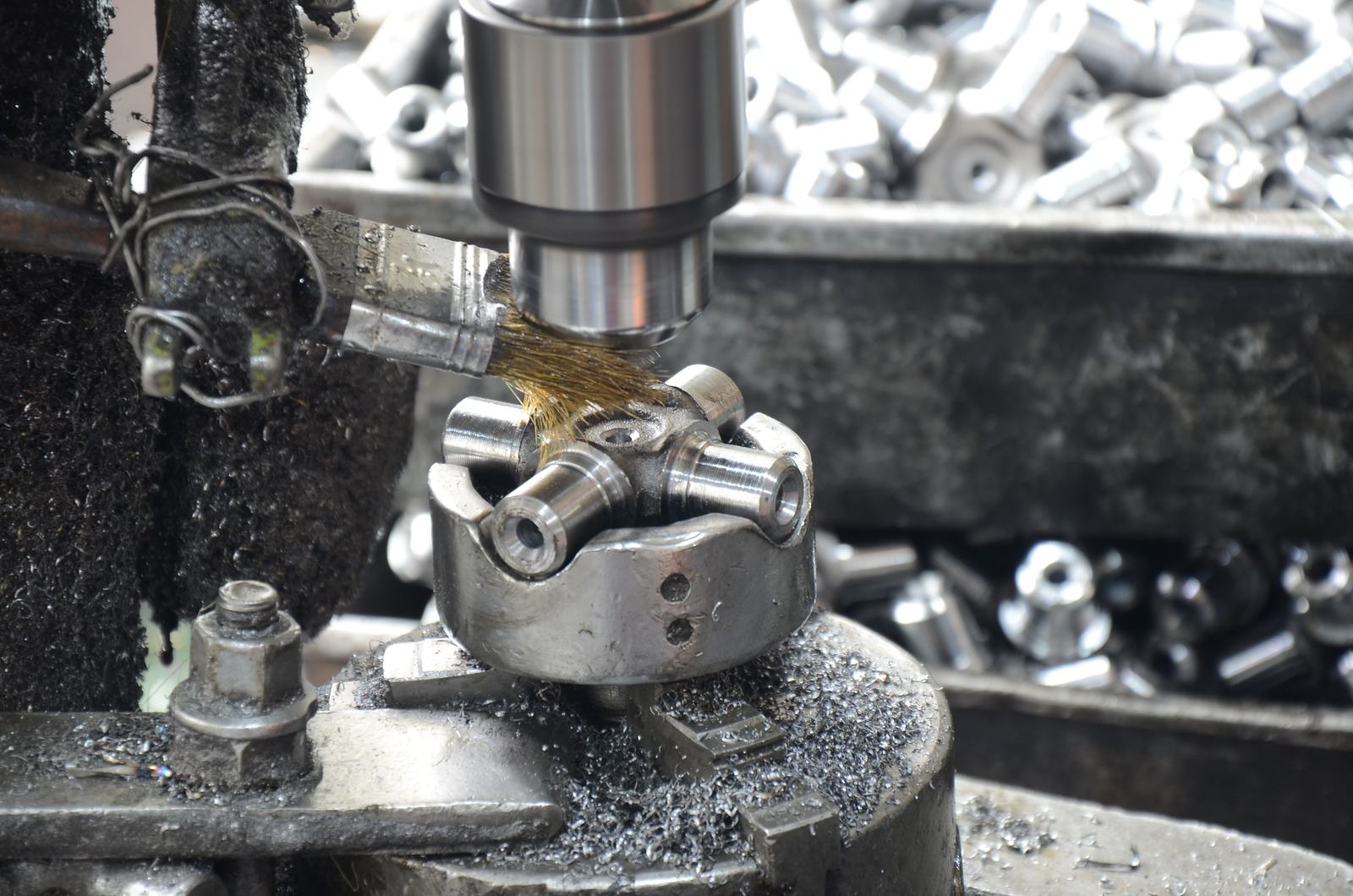
A universal joint cross under a machining spindle highlights why burr removal and clean lubrication passages deserve attention.
Inspect the intersections
This close view shows a universal joint cross positioned beneath a machining spindle, with a brush and metal chips nearby. For serviceable Jeep Grand Cherokee driveshaft joints using this construction, small manufacturing details influence later operation. Burrs can remain where drilled passages meet or where a tool exits a surface. Their removal should preserve the intended geometry of the component.
Protect the lubrication path
In a greasable cross, lubricant must reach the bearing locations through the designed internal passages. A restriction can prevent effective distribution even when grease enters the fitting. Ask how the producer confirms passage continuity and removes residual chips. Spicer explains that proper lubrication is important to universal joint life. The specific lubrication procedure depends on whether the joint is serviceable or supplied as a sealed assembly.
Define a controlled cleaning check
An inspection plan should identify critical passage openings, edge conditions and cleanliness requirements. Suitable checks may involve magnification, controlled flushing or another validated method for the design. Agree how results are recorded and how loose particles are detected. Cleaning should take place after operations capable of generating chips. Keep accepted crosses protected before needle bearings, cups and seals are assembled around them.
Investigate the cause of rough movement
When an assembled joint feels rough or shows uneven movement, consider debris, bearing placement, cup seating and dimensional condition together. Forcing movement can conceal the original symptom and damage parts. A qualified technician should establish which driveshaft design is fitted before planning a repair. Grand Cherokee applications can use different joint arrangements, so confirm serviceability through the correct reference. Retain the affected cross and bearing components for a documented review. Detailed photographs of passage openings and recovered particles help a supplier investigate whether contamination entered during manufacture, handling or installation. For a greasable design, ask for a drawing that identifies each passage exit and specifies which openings must remain clear after machining.