
Jeep Grand Cherokee LED Headlights and Heat Management
LED lamps with finned heat sinks highlight the relationship between cooling, stable light output and beam quality.
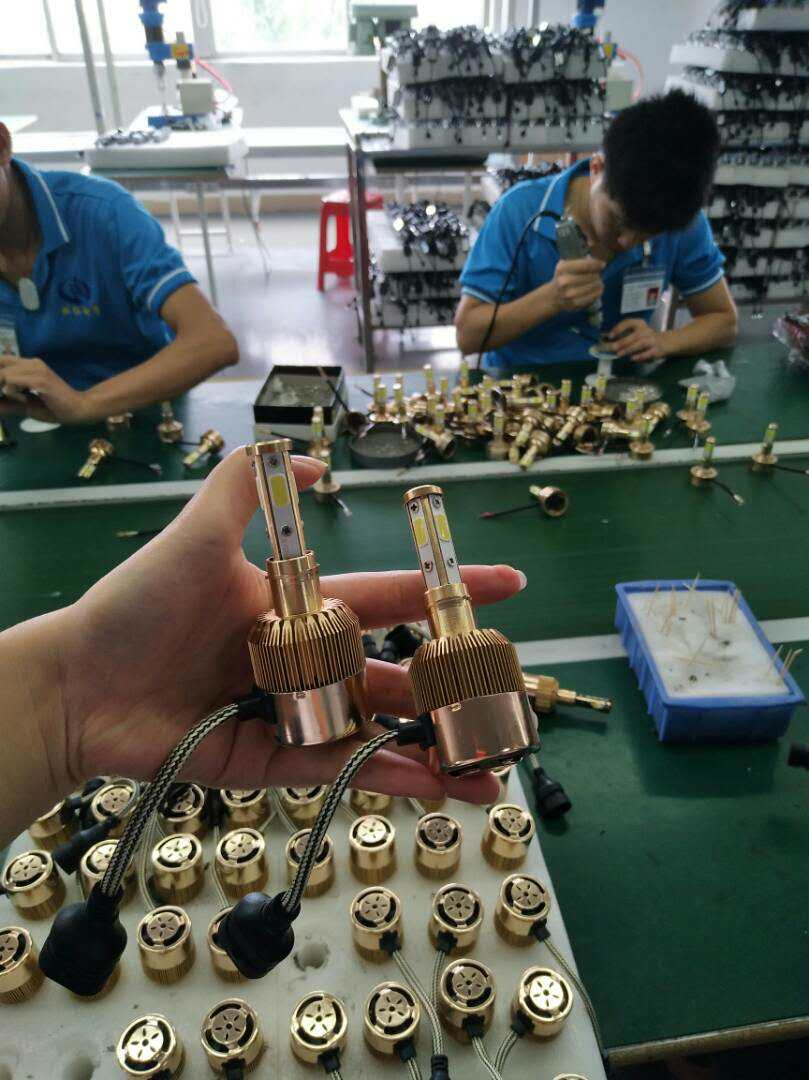
Heat is part of lighting quality
The lamps in this photograph have prominent metal fins behind their LED emitters. These features draw attention to thermal management. When evaluating Jeep Grand Cherokee LED headlight options, consider how heat travels away from the light source. HELLA explains that suitable cooling supports LED performance and service life. Initial brightness provides only one observation during a more complete product evaluation.
Observe output after warming
Compare lamps under the same supply conditions and installation arrangement. Record light output after the assembly reaches the defined operating condition, alongside relevant temperature measurements. Examine how the heat sink or cooling system functions within the available headlamp space. Restricted airflow or contact with nearby parts can change the result. Ask for test conditions that represent the intended assembly, including its housing and surrounding thermal environment.
Check the beam in the actual headlamp
Emitter position and orientation affect how light is distributed by the reflector or projector. Evaluate the beam using suitable headlamp testing equipment and the correct aim procedure. Examine useful illumination and glare control together. A lamp that fits the socket still needs optical compatibility with the headlamp design. Product selection must account for the vehicle lighting specification and the applicable approval requirements for the intended market.
Review the electrical and mechanical interfaces
Confirm connectors, cable routing, retention and available clearance before planning an installation. Check whether the Grand Cherokee lighting system requires a particular driver or compatible control electronics. Observe flicker, warning messages and stable operation through the relevant functions. Compare these findings with the thermal and optical results. An evidence-based evaluation should explain how the complete lamp performs after warming, how it directs light and how it integrates with the vehicle. Those separate observations provide a stronger basis for selection than a single advertised brightness figure. Compare the beam after the lamp has warmed, since an initial reading does not fully describe how the assembly behaves during sustained operation.